The newspaper industry is changing rapidly as readers move from printed publications to digital platforms. While advertising and print circulation remain important revenue sources, digital subscriptions provide publishers with an additional way to generate predictable and recurring income.
A newspaper subscription software solution helps publishers manage digital readers, subscription plans, payments, access permissions, renewals, invoices, and customer accounts from one centralized platform.
With the right ePaper CMS, newspapers can offer monthly subscriptions, annual plans, premium editions, single-edition purchases, and membership packages. This article explains how newspaper subscription software works and how publishers can use it to monetize digital newspaper content.
What Is Newspaper Subscription Software?
Newspaper subscription software is a digital system that allows publishers to create, sell, and manage access to newspaper content.
It can be used for:
- Digital newspapers
- ePaper editions
- Online news portals
- Digital magazines
- Regional newspapers
- Local publications
- Business newspapers
- Community publications
- Educational newspapers
- Special-interest publications
The software connects readers, subscription plans, payment systems, and digital content.
A typical subscription workflow looks like this:
- A reader visits the newspaper website.
- The reader selects a subscription plan.
- The reader creates an account.
- The reader completes the payment.
- The system confirms the transaction.
- Access is granted according to the plan.
- The subscription remains active until expiry or cancellation.
- The system manages renewal and access status.
This process reduces manual work and gives publishers better control over digital revenue.
Why Do Newspapers Need Subscription Software?
Managing subscriptions manually becomes difficult as the number of readers increases.
A newspaper may need to manage:
- Thousands of reader accounts
- Different subscription plans
- Payment confirmations
- Renewal dates
- Expired subscriptions
- Failed payments
- Refund requests
- Access restrictions
- Digital receipts
- Customer support requests
- Subscription reports
A subscription management system can automate many of these tasks and reduce administrative errors.
Main Benefits
- Centralized subscriber management
- Automated payment processing
- Recurring revenue opportunities
- Better reader access control
- Faster subscription activation
- Automated renewal reminders
- Digital invoice and receipt generation
- Subscription analytics
- Improved customer experience
- Reduced manual administration
Different Types of Newspaper Subscription Models
There is no single subscription model that works for every publication. Publishers should choose a model based on their audience, content type, location, and business goals.
1. Free Digital Newspaper
Under this model, readers can access digital editions without paying.
The publisher may earn revenue through:
- Display advertising
- Sponsored content
- Brand partnerships
- Donations
- Events
- Classified listings
- Commercial partnerships
A free model can help newspapers build a large digital audience.
Suitable For
- New digital publications
- Community newspapers
- Local news websites
- Publications focused on audience growth
- Newspapers with strong advertising revenue
2. Freemium Subscription Model
A freemium model provides some content for free and restricts premium content to subscribers.
For example:
- Cover page available to everyone
- Selected articles available for free
- Complete PDF edition available to subscribers
- Full archive access available to paid members
- Premium reports restricted to subscribers
This model allows readers to understand the value of the publication before making a payment.
3. Monthly Subscription
Readers pay a fixed amount every month to access digital content.
A monthly plan may include:
- Current digital editions
- All regional editions
- Premium articles
- Digital archives
- Ad-free reading
- Special supplements
- Subscriber-only newsletters
Monthly subscriptions are useful for readers who prefer smaller, recurring payments.
4. Annual Subscription
An annual subscription provides access for an entire year.
Publishers may offer annual plans at a discounted rate compared with twelve monthly payments.
Benefits of annual subscriptions include:
- Higher upfront revenue
- Better customer retention
- Lower payment processing frequency
- More predictable income
- Reduced monthly cancellation risk
5. Single-Edition Purchase
Readers can purchase access to one specific edition.
This option may be suitable for:
- Special editions
- Election coverage
- Festival supplements
- Business reports
- Annual publications
- Event-based newspapers
- Historical editions
Single-edition access can also be useful for occasional readers who do not want a long-term subscription.
6. Premium Membership
A premium membership may include additional benefits such as:
- Exclusive articles
- Early access
- Special newsletters
- Digital events
- Expert interviews
- Premium reports
- Ad-free content
- Downloadable editions
- Members-only discussions
Membership packages can help newspapers build a stronger relationship with their most loyal readers.
7. Institutional Subscription
Schools, colleges, libraries, businesses, and government organizations may purchase access for multiple users.
An institutional plan may include:
- Multiple reader accounts
- Organization-level billing
- IP-based access
- Shared access permissions
- Usage reports
- Dedicated support
- Multi-user licensing
This model can be valuable for newspapers with educational, professional, or research-oriented content.
8. Print Plus Digital Subscription
Publishers can combine physical newspaper delivery with digital access.
For example, a package may include:
- Printed newspaper delivery
- Digital ePaper access
- Digital archive access
- Premium articles
- Special supplements
- Subscriber newsletters
This hybrid model allows traditional newspapers to modernize without abandoning their existing print audience.
Important Features of Newspaper Subscription Software
A professional newspaper subscription platform should include more than a payment button. It should manage the complete subscription lifecycle.
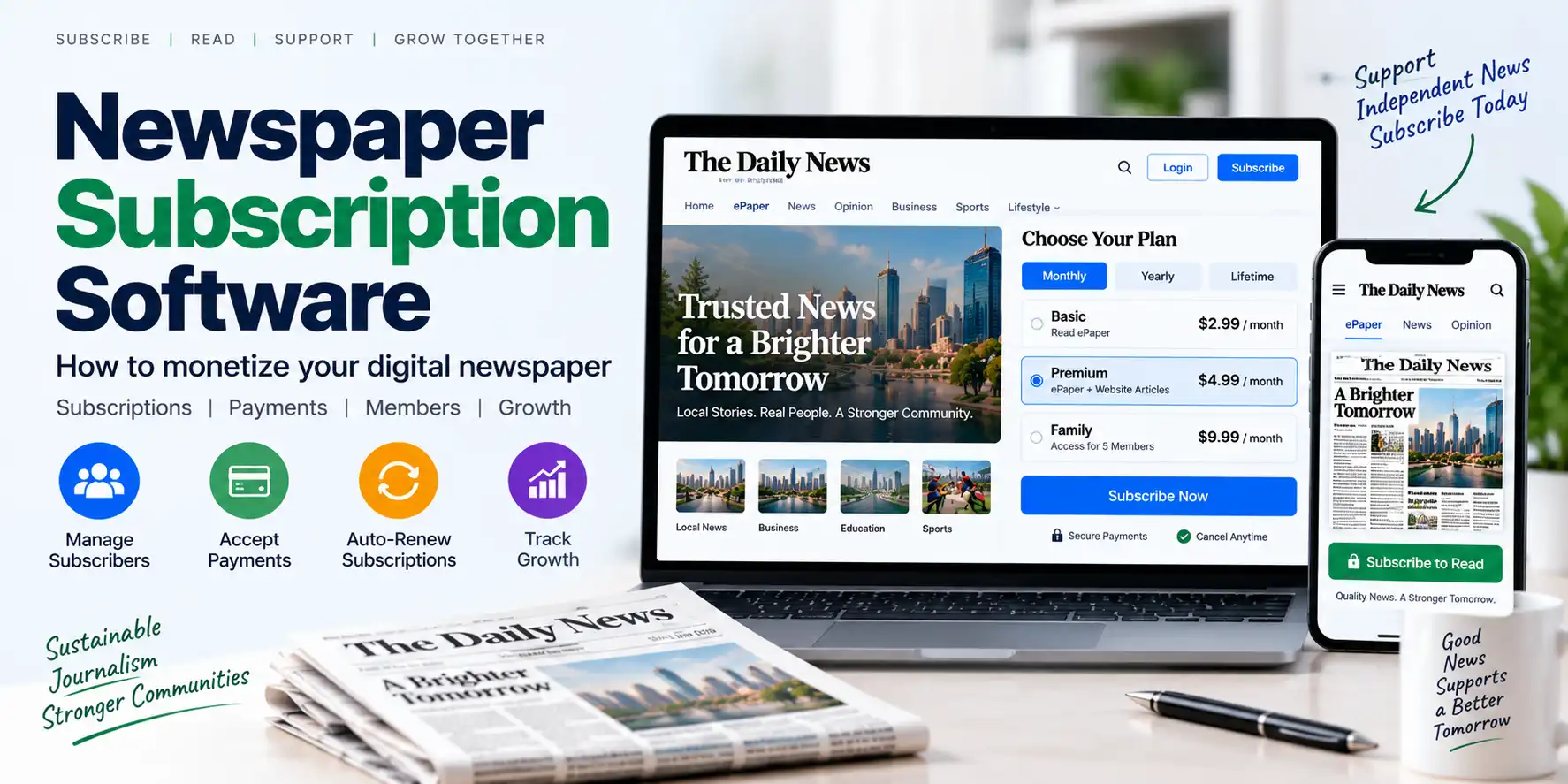
1. Subscription Plan Management
Administrators should be able to create and manage different plans.
Typical plan fields include:
- Plan name
- Plan description
- Price
- Billing interval
- Access duration
- Included editions
- Included features
- Trial period
- Discount
- Tax settings
- Renewal status
- Visibility status
Example plans may include:
| Plan | Duration | Possible Access |
|---|---|---|
| Basic | Monthly | Current digital editions |
| Standard | Annual | Current editions and selected archives |
| Premium | Monthly | All editions, archives, and premium content |
| Institutional | Custom | Multi-user or organization access |
2. Reader Registration and Login
Readers should be able to create accounts using:
- Email address
- Mobile number
- Password
- Social login
- One-time password
- Google Sign-In
The system should store account details securely and allow readers to manage their profiles.
Useful account features include:
- Profile management
- Subscription status
- Payment history
- Invoice history
- Renewal date
- Saved editions
- Password reset
- Logout from other devices
3. Payment Gateway Integration
Payment gateway integration allows readers to purchase subscriptions online.
Depending on the target market, publishers may need support for:
- Credit cards
- Debit cards
- Net banking
- UPI
- Digital wallets
- International cards
- PayPal
- Other regional payment methods
The payment process should provide:
- Secure checkout
- Payment confirmation
- Order creation
- Subscription activation
- Receipt generation
- Email or SMS notification
Payment gateway availability depends on the selected software and the publisher’s country.
4. Recurring Subscription and Auto-Renewal
Recurring subscriptions allow readers to pay automatically at regular intervals.
For example:
- Monthly renewal
- Quarterly renewal
- Annual renewal
The system should manage:
- Renewal dates
- Payment authorization
- Successful renewals
- Failed payments
- Retry attempts
- Expiry dates
- Cancellation requests
- Renewal notifications
Publishers should clearly explain auto-renewal terms before taking payment.
5. Access Control
Subscription software should control what each reader can access.
Access rules may be based on:
- Active subscription
- Subscription plan
- Edition
- Region
- Language
- Publication category
- Article type
- Membership level
- Expiry date
For example:
- Free users can view selected pages.
- Basic subscribers can read current editions.
- Premium subscribers can access the complete archive.
- Institutional users can access multiple editions.
Access control must be tested carefully to prevent unauthorized content access.
6. Subscription Status Management
Every subscription should have a clear status.
Common statuses include:
- Pending
- Active
- Trial
- Expiring soon
- Expired
- Cancelled
- Suspended
- Payment failed
- Refunded
- Paused
Administrators should be able to view and update subscription records according to defined business rules.
7. Digital Receipts and Invoices
A professional system should generate receipts or invoices after successful payments.
A digital receipt may include:
- Publisher name
- Reader name
- Subscription plan
- Transaction ID
- Payment date
- Amount
- Tax details
- Billing period
- Payment status
- Renewal date
Digital receipts make accounting and customer support easier.
8. Renewal Reminders
Renewal notifications can help reduce accidental subscription expiry.
Notifications may be sent through:
- SMS
- Push notifications
- Website alerts
- WhatsApp, where supported
Useful reminders include:
- Subscription activated
- Subscription expiring soon
- Payment successful
- Payment failed
- Subscription renewed
- Subscription cancelled
- Refund processed
9. Coupon and Discount Management
Publishers may use promotional discounts to attract new subscribers.
Coupon features may include:
- Percentage discounts
- Fixed-amount discounts
- First-payment discounts
- Annual-plan offers
- Festival promotions
- Student discounts
- Referral coupons
- Limited-time offers
The system should define coupon validity, usage limits, eligible plans, and expiration dates.
10. Subscriber Dashboard
Readers should have access to a personal dashboard.
A subscriber dashboard may display:
- Current plan
- Subscription status
- Start date
- Expiry date
- Renewal date
- Payment history
- Invoices
- Available editions
- Account settings
- Cancellation options
A simple dashboard improves transparency and reduces support requests.
11. Administrator Dashboard
Administrators need a centralized view of subscription activity.
The dashboard may display:
- Total subscribers
- Active subscribers
- New subscriptions
- Expired subscriptions
- Cancelled subscriptions
- Monthly revenue
- Annual revenue
- Failed payments
- Renewal rate
- Popular plans
- Subscriber growth
Reports can help publishers identify successful plans and improve pricing strategies.
12. Multi-Edition Subscription Management
A newspaper group may publish multiple editions.
For example:
- City edition
- District edition
- State edition
- National edition
- Business edition
- Weekend edition
- Language edition
Subscription software should allow publishers to decide whether a plan provides access to one edition or multiple editions.
13. Multi-Language Support
Regional newspapers may publish in multiple languages. A subscription system should be capable of organizing plans and access rules for different language editions.
For example:
- Hindi edition
- English edition
- Bengali edition
- Marathi edition
- Tamil edition
- Telugu edition
The exact language support depends on the platform and its configuration.
14. Role-Based Administration
Different staff members may need different permissions.
Possible roles include:
- Super Administrator
- Subscription Manager
- Finance Manager
- Content Editor
- Customer Support Executive
- Regional Manager
- Marketing Manager
Role-based access reduces the risk of unauthorized changes.
15. Security and Privacy
Subscription systems process personal and payment-related information. Security should therefore be a major priority.
Important security practices include:
- HTTPS encryption
- Secure password storage
- Role-based access
- Two-factor authentication
- Payment gateway security
- Session management
- Login monitoring
- Regular backups
- Audit logs
- Software updates
- Data access controls
Publishers should also publish clear privacy, refund, cancellation, and subscription terms.
How to Monetize a Digital Newspaper With Subscription Software
Subscription software is a technical tool, but successful monetization also requires a clear business strategy.
Step 1: Understand Your Audience
Before creating subscription plans, identify your readers.
Consider:
- Age group
- Location
- Language
- Reading habits
- Income range
- Device usage
- Interest in local news
- Willingness to pay
- Existing print subscription behavior
A regional newspaper may need a different pricing strategy from a national business publication.
Step 2: Identify Premium Content
Not every piece of content must be placed behind a paywall.
Potential premium content includes:
- Complete ePaper editions
- Investigative reports
- Business analysis
- Local exclusive news
- Historical archives
- Special supplements
- Expert interviews
- Data reports
- Premium newsletters
- Ad-free reading
The paid content should offer clear value to readers.
Step 3: Select the Right Paywall Model
Possible paywall models include:
Hard Paywall
Most content requires a subscription.
Soft Paywall
Some content is available for free, while premium content requires payment.
Metered Paywall
Readers can access a limited number of articles before being asked to subscribe.
Registration Paywall
Readers must create an account to access selected content.
Edition-Based Paywall
Access is restricted according to specific newspaper editions.
The best model depends on the publication’s audience and business goals.
Step 4: Set Competitive Pricing
Pricing should consider:
- Content quality
- Reader demand
- Competitor pricing
- Publication frequency
- Number of editions
- Archive access
- Subscription duration
- Payment processing costs
- Customer support expenses
Publishers may offer a lower monthly price and a discounted annual plan to encourage long-term subscriptions.
Step 5: Create a Simple Subscription Journey
The subscription process should be easy to understand.
A recommended journey is:
- Reader visits the website.
- Reader views available plans.
- Reader compares benefits.
- Reader selects a plan.
- Reader creates an account.
- Reader completes payment.
- System activates access.
- Reader receives confirmation.
- Reader opens the digital edition.
Avoid unnecessary form fields and confusing payment steps.
Step 6: Promote Subscription Benefits
Readers should clearly understand what they receive.
Possible benefits include:
- Full daily ePaper
- Exclusive articles
- Complete archives
- Ad-free experience
- Mobile access
- Early edition access
- Special supplements
- Subscriber newsletters
- Premium reports
- Multiple regional editions
A clear comparison table can help readers select the right plan.
Step 7: Reduce Subscription Cancellation
Publishers should monitor why readers cancel.
Common reasons include:
- High price
- Lack of useful content
- Technical problems
- Difficult cancellation
- Poor mobile experience
- Payment failures
- Infrequent updates
- Confusing subscription benefits
Possible solutions include:
- Improving content quality
- Offering flexible plans
- Providing temporary pauses
- Improving customer support
- Sending renewal reminders
- Fixing payment problems
- Adding more subscriber benefits
Step 8: Track Subscription Performance
Important metrics include:
- New subscribers
- Active subscribers
- Monthly recurring revenue
- Annual recurring revenue
- Renewal rate
- Cancellation rate
- Churn rate
- Average revenue per user
- Conversion rate
- Trial-to-paid conversion
- Failed payment rate
- Lifetime customer value
These metrics help publishers evaluate the success of their digital subscription strategy.
Newspaper Subscription Software and ePaper CMS
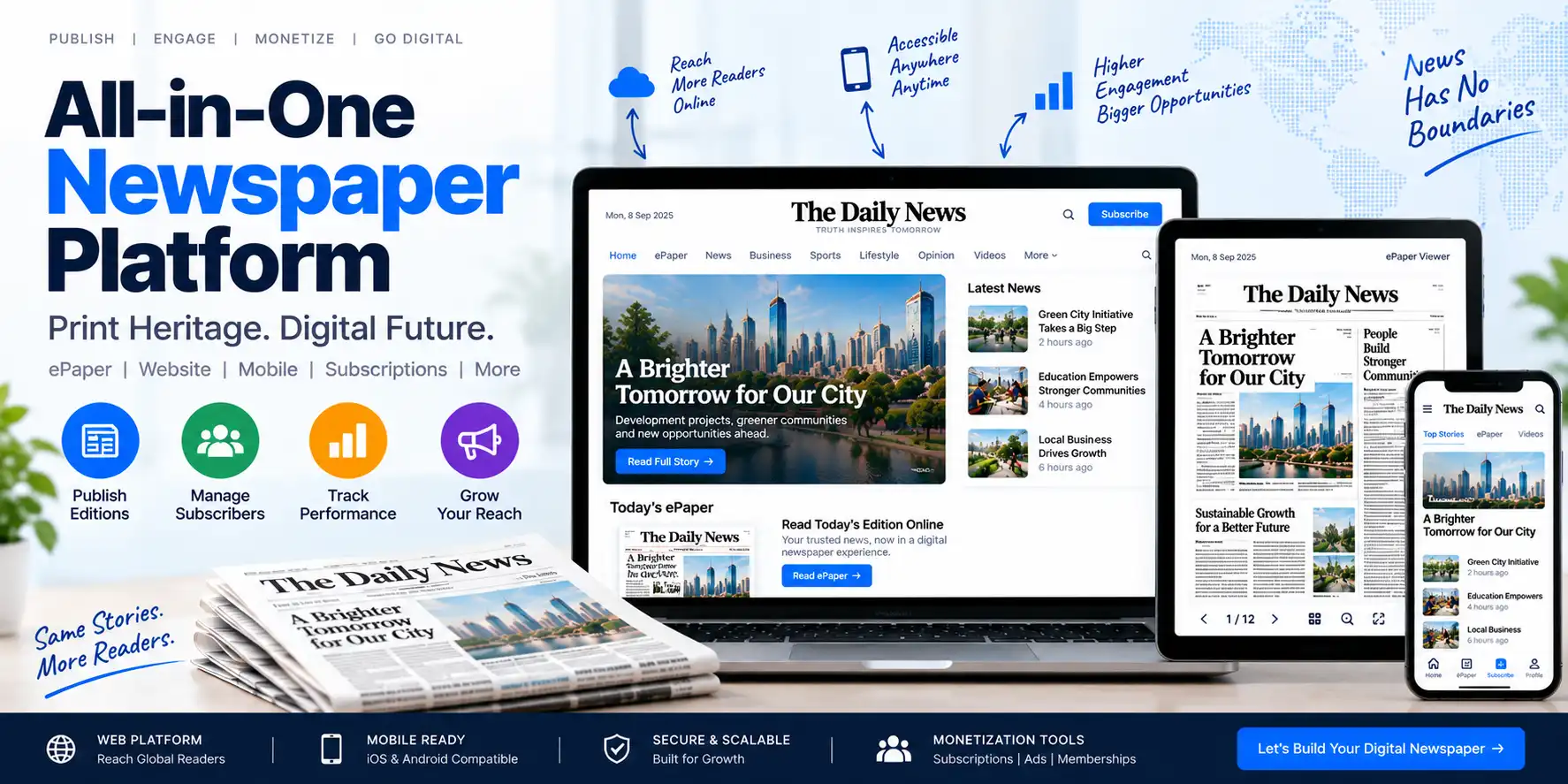
An ePaper CMS can combine digital newspaper publishing with subscription management.
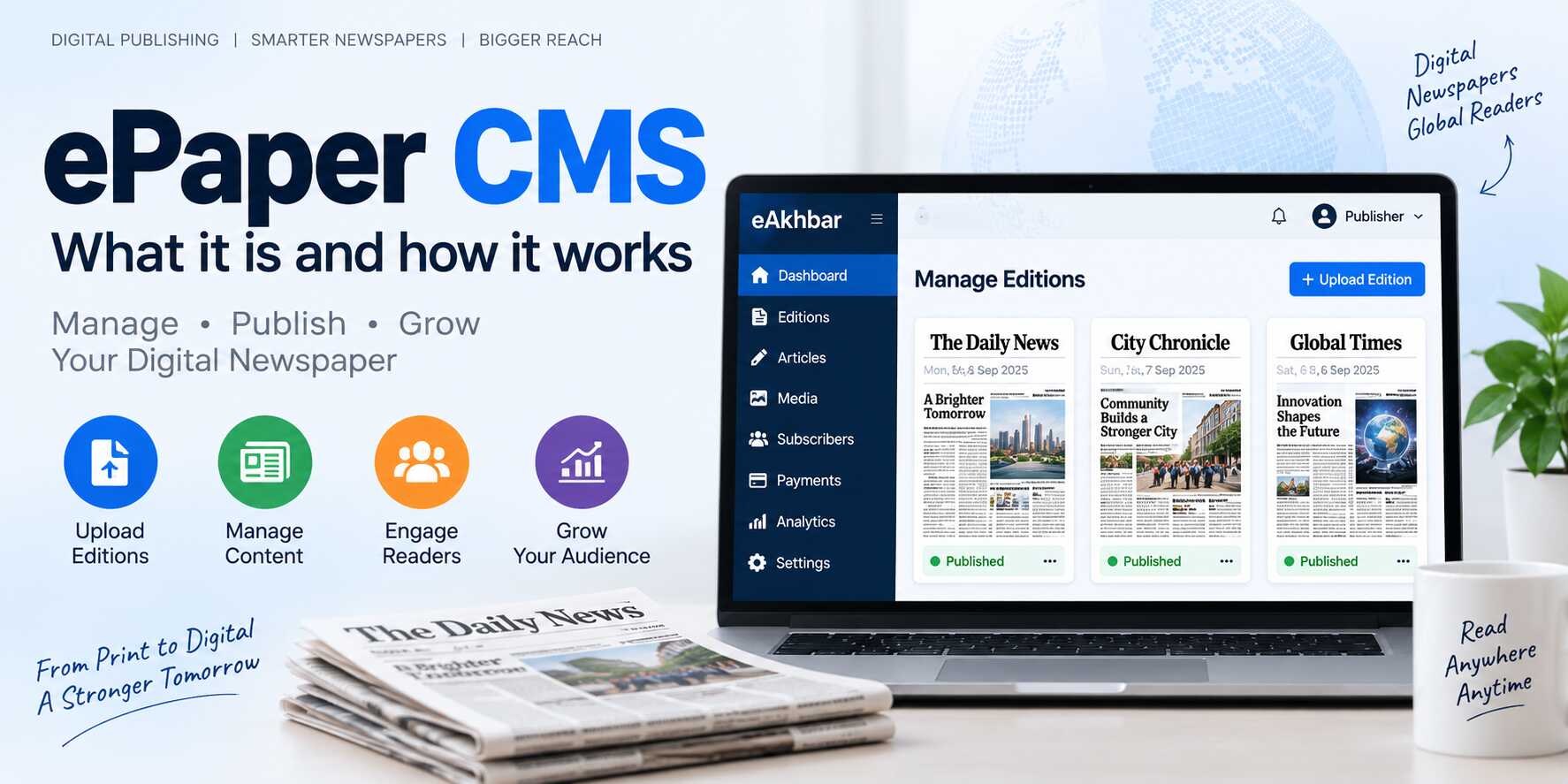
A complete system may allow administrators to:
- Upload newspaper PDFs
- Create digital editions
- Map articles
- Manage digital archives
- Create subscription plans
- Manage readers
- Accept online payments
- Control content access
- Send notifications
- Generate digital receipts
- Monitor reader activity
This integrated approach reduces the need to manage separate systems for publishing and subscriptions. Features such as reader subscriptions, recurring subscriptions, online payment integrations, digital receipts, and role-based administration are available in some ePaper CMS solutions.
For a detailed publishing workflow, read PDF to ePaper: How to Convert and Publish a Newspaper Online.
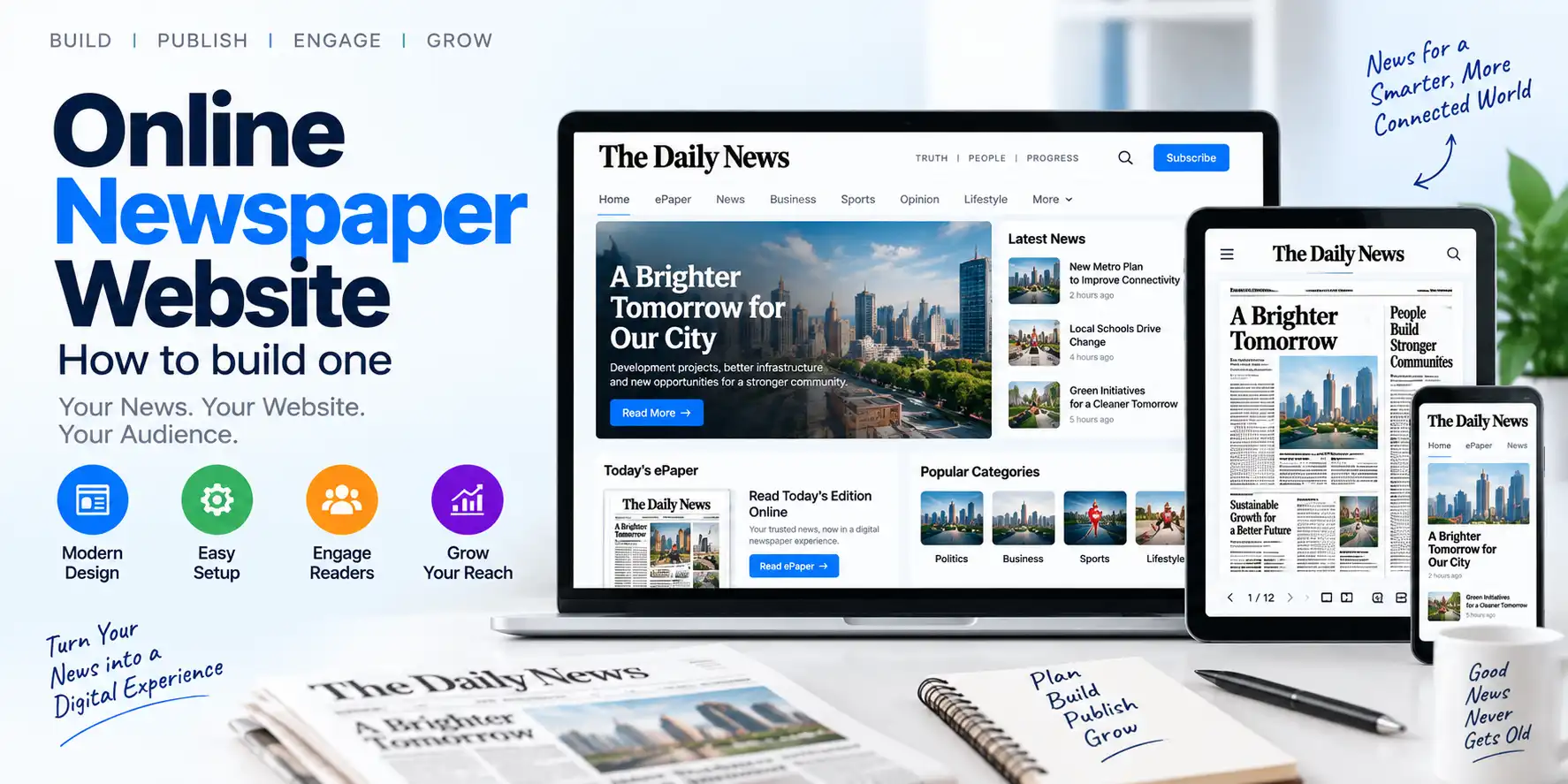
You can also explore How to Create an Online Newspaper Website From PDF to understand the complete website development process.
How to Improve Digital Subscription Conversion
Use Clear Pricing
Display plan prices, billing periods, and benefits clearly.
Offer Multiple Payment Options
Support payment methods suitable for your target readers.
Provide a Free Preview
Allow readers to view selected content before subscribing.
Optimize the Checkout Page
The payment page should work well on mobile devices and load quickly.
Build Trust
Display:
- Contact information
- Refund policy
- Privacy policy
- Terms and conditions
- Secure payment indicators
- Customer support details
Use Social Proof
Publishers may display:
- Reader testimonials
- Subscriber counts
- Awards
- Media partnerships
- Reviews
- Community feedback
Promote Annual Plans
Annual plans can improve retention and provide more predictable revenue.
Send Personalized Offers
Relevant offers can be created for:
- New readers
- Expired subscribers
- Long-term subscribers
- Students
- Institutions
- Regional audiences
Common Mistakes in Newspaper Subscription Management
1. Complicated Registration
Long forms can discourage readers from completing the subscription process.
2. Unclear Plan Benefits
Readers should know exactly what each plan includes.
3. Hidden Renewal Terms
Auto-renewal conditions should be clearly communicated.
4. Limited Payment Options
A lack of suitable payment methods can reduce conversions.
5. Poor Mobile Experience
Many readers subscribe through smartphones. The complete process should be mobile-friendly.
6. Weak Access Control
Incorrect permissions may allow unauthorized users to access paid content.
7. No Renewal Reminders
Readers may forget renewal dates and unintentionally lose access.
8. Difficult Cancellation
A complicated cancellation process can damage reader trust.
9. Ignoring Failed Payments
Failed transactions should trigger clear notifications and recovery options.
10. Not Reviewing Subscription Data
Publishers should regularly analyze revenue, churn, renewals, and plan performance.
Frequently Asked Questions
What is newspaper subscription software?
Newspaper subscription software is a system used to create and manage digital newspaper subscriptions, reader accounts, payments, renewals, access permissions, receipts, and subscription reports.
Can I sell digital newspaper subscriptions online?
Yes. A suitable ePaper CMS or newspaper subscription platform can allow publishers to sell monthly, annual, premium, or single-edition access online.
Can I offer both free and paid newspaper content?
Yes. Publishers can use free, freemium, metered, or premium access models depending on their business strategy.
Can subscription software support annual plans?
Yes. Annual subscriptions can provide access for a fixed period and may include discounted pricing compared with monthly plans.
Can readers automatically renew their subscriptions?
If the payment gateway and software support recurring billing, readers may be able to enable automatic renewal.
Can I sell access to a single newspaper edition?
Yes. Some subscription platforms support single-edition purchases or edition-based access rules.
Can I manage print and digital subscriptions together?
This depends on the software. Some systems can be customized to support combined print-and-digital subscription packages.
How can I reduce subscription cancellations?
Improve content quality, simplify the user experience, offer flexible plans, provide helpful customer support, send renewal reminders, and communicate subscriber benefits clearly.
Is online payment integration necessary?
Online payment integration is essential if publishers want readers to purchase subscriptions directly through the website. The available payment methods depend on the chosen gateway and target market.
Can a newspaper subscription system support multiple editions?
Yes. A suitable platform can provide access to one or multiple editions according to the subscription plan.
Conclusion
Newspaper subscription software provides publishers with the tools needed to turn digital readership into a sustainable revenue stream. Instead of managing payments, users, renewals, and access manually, publishers can automate the complete subscription lifecycle.
A successful digital subscription strategy should combine:
- Valuable content
- Clear pricing
- Flexible plans
- Secure payments
- Simple registration
- Mobile-friendly access
- Reliable customer support
- Automated renewals
- Transparent policies
- Performance analytics
By integrating subscription management with an ePaper CMS, newspapers can publish digital editions, manage readers, monetize content, and build long-term relationships with subscribers.
For publishers planning a modern digital newspaper business, subscription software is not just a payment feature—it is an important part of the overall digital publishing strategy.